





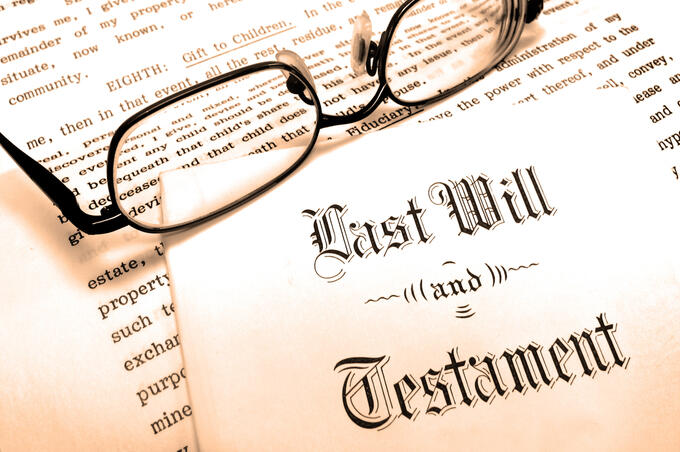
What happens to your assets after your death? If you’ve established a trust, your assets can be passed down without going through probate. If you have a will, it will likely have to go through probate, which is the court-supervised process of administering an estate. The probate process can be stressful and time-consuming for your grieving loved ones. With the right estate planning tools, you may be able to help streamline the process of distributing your assets. A lawyer can help you create a customized plan, but before you begin, you should understand the differences between trust vs. will vs. probate.
What Is a Will?
A will is estate planning at its most fundamental level. Creating a will allows you to specify how your assets should be distributed, but it’s more than that — you may also nominate guardians for your children and caretakers for pets. Before creating a will, you should understand these key terms:
-
Testator: The person creating the will
-
Executor: A person appointed by the testator to carry out the will
-
Beneficiaries: People who will inherit money or property through the will
Most wills must go through probate, which is the process of “proving” the will in court. Probate verifies that the will is valid and legally enforceable.
If you die with no will, your assets will likely go through probate as well — but they will be distributed according to your state’s intestacy laws.
What Is a Living Will?
Although the terms “will” and “living will” sound similar, the two are very different. A living will (sometimes called an “advance directive”) is a document specifying what kinds of emergency medical treatments you consent to (or do not consent to) if you are incapacitated.
Living wills often include preferences regarding treatments like:
-
CPR (cardiopulmonary resuscitation)
-
Use of feeding and hydration tubes
-
Use of ventilators
-
Organ donation
-
Dialysis
-
Medications for pain at the end of your life
The process of creating a living will is not one you want to rush. Reflecting on what you want is important, and so is talking to a doctor or a child adoption attorney. A trusted physician can help you understand what's involved with each type of emergency or life-sustaining treatment.
In addition to a living will, many people also nominate a healthcare proxy, or someone who is legally authorized to make medical decisions for them if they are unable to. It’s essential to discuss your living will and your healthcare preferences with your proxy so they will be well-equipped to make decisions for you if the time comes.
What Is a Trust?
In addition to wills, many people choose to include trusts in their estate planning. Technically, a trust is a document that specifies how your assets should be distributed to your loved ones, charities, and other beneficiaries. However, in practice, a trust can help you accomplish many different objectives, including:
-
Protecting your assets from creditors
-
Allowing you to specify how and when beneficiaries receive assets
-
Avoiding the probate process
-
Minimizing strife after your death (a trust can’t be challenged in court like a will can)
-
Maintaining privacy (because probate is a matter of public record)
-
Reducing gift, income, or estate taxes
The landscape of trusts is complex — and for the average person, it can be difficult to navigate. An estate planning lawyer can help you understand whether a trust is right for you. They may advise you to consider creating one or more common trust types.:
Charitable Remainder Trusts
These trusts can provide considerable tax benefits. Once you create one, it will pay you or a beneficiary an annual sum. After your death, the remaining assets in the trust go to a charity you choose.
Marital Trusts
These trusts simplify the transfer of assets when one spouse passes away. They also prevent the surviving spouse from having to pay estate taxes.
Special Needs Trusts
These trusts help you ensure a loved one with a disability receives the financial support they need. If your loved one is the beneficiary of a special needs trust, they can still qualify for government benefits.
Education Trusts
These trusts help you ensure your assets will be used to further a loved one’s education.
Life Insurance Trusts
A life insurance trust can help your loved ones avoid having to pay taxes on the proceeds from your life insurance policy.
What Is the Difference Between a Trust and an Estate?
Some people mistakenly use the words “trusts” and “estates” interchangeably. However, the two are very different. An estate is the total sum of your assets left when you pass away (including your home, vehicles, bank accounts, etc.).
On the other hand, a trust is a legal entity you establish to hold and distribute your assets. With a trust, you can specify how and when you want the assets in your estate to be distributed.
What Is Probate?
“Probate” refers to the administration of your estate after death. When many people imagine probate, they picture beneficiaries fighting over assets in court. That is (unfortunately) sometimes part of the process. However, probate involves much more than this.
In the probate process, your executor (the person you appoint to administer your estate) must handle the following:
-
Gathering all of your assets
-
Applying for a grant of probate from the court
-
Completing an inheritance tax return and paying any estate taxes
-
Repaying any debts remaining after your death
-
Distributing your assets according to your will
Probate involves the court “proving” the validity of your will as well. This means that your beneficiaries may challenge the will if they believe there was a mistake.
What Is a Life Estate Deed?
A life estate deed can help you transfer your home to a beneficiary while avoiding probate. It can also help you ensure your home stays in your family. When you create a life estate deed, you give a beneficiary the right to live in the property for life. After that person’s death, the property will be transferred to another beneficiary you specify.
A life estate deed might not be right in every circumstance. However, if you die and leave behind a spouse and children, it allows you to leave the house to your spouse while ensuring your children inherit the property after your spouse’s death, too.
Trust vs. Will vs. Probate: How to Know Which Is Right for You
Understanding trust vs. probate vs. wills can be difficult. Having a will is virtually always ideal, and if you can create a trust to keep your assets out of probate, it can make things significantly easier for your loved ones after your death.
However, while it’s wise to familiarize yourself with these concepts and what they mean in the context of your estate plan, the best way to determine which is right for you is to consult an experienced real estate attorney.
No two people are alike, and no two estate plans should be, either. The right lawyer will take the time to get to know you and your situation and make a recommendation.
How to Protect Your Assets from Lawsuits and Creditors
If you anticipate leaving behind substantial debt (or being named in a lawsuit), taking action to shield your assets from potential creditors is crucial. There are a variety of strategies that can help you do this:
-
Creating an irrevocable trust and transferring assets into it
-
Retitling assets like homes and vehicles to your spouse or other relative
-
Contributing as much as you can to retirement accounts (as these are protected from most creditors)
Shielding your assets from potential creditors is a complex endeavor, but your attorney can help you create a plan.
Asset Protection for Specific Professions
Certain professionals — like attorneys, doctors, and financial advisers — face a risk of being sued for malpractice. If you are in one of these professions, having professional liability insurance is essential. If you are sued, your insurance provider may pay the plaintiff a settlement, leaving your assets unscathed.
It’s also wise to establish a limited liability company or limited partnership. These entities provide a layer of separation between you and your business, which protects your personal assets if your business faces a lawsuit or financial insolvency.
How an Estate and Trust Lawyer Can Help You
Thinking about estate planning is often emotionally draining. However, a robust estate plan will give you and your family peace of mind. This planning process is too important to undertake without guidance from an experienced estate lawyer.
A lawyer who specializes in trusts and estate planning will be able to assess your unique situation and find solutions that work for you, your family, and your business.
Reach Out to an Attorney for Help Managing Your Assets
Determining how to best protect your assets with an estate plan can be challenging. Fortunately, you don’t need to make these decisions alone. An experienced estate planning lawyer can discuss your financial situation with you and help you create a comprehensive strategy for asset protection and financial wellness.