





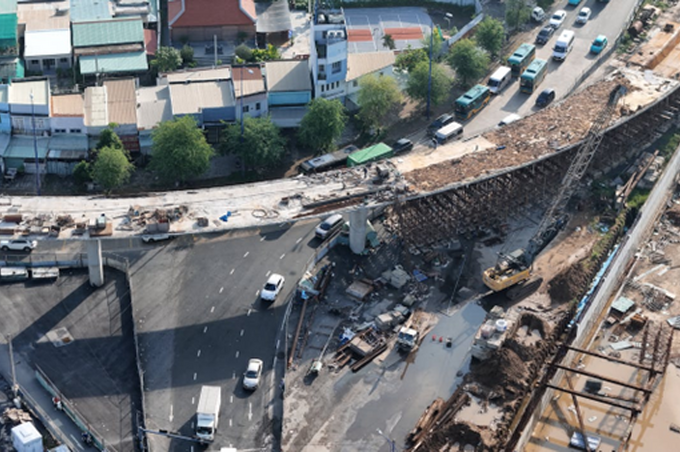
$600M Project cost, largest in Southern AZ history 3+ Years of active construction through 2028 3 Lanes in each direction after widening 4 Major interchange changes planned If you drive through southeast Tucson regularly, you already know something big is happening on I-10. Orange barrels, lane shifts, ramp closures, detours. It can feel like the road changes every single week. That is because it actually does. The Arizona Department of Transportation has kicked off a project to reconstruct and widen Interstate 10 between Kino Parkway and Country Club Road. At $600 million, it is the largest highway construction project in southern Arizona's history. Here is everything you need to know about what is going on, why it matters, and how to stay safe driving through it.
So What's Going On Out There?
Why This Stretch of I-10 Needed a Total Rebuild
This section of I-10 has been a bottleneck for years. Two lanes in each direction simply could not keep up with Tucson's growing traffic demand. Merge conflicts, slowdowns near interchanges, and outdated ramp designs made this corridor one of the more frustrating drives in the city.
|
This project came from a 2020 study that looked at how to best improve mobility along a roughly 10-mile stretch of I-10 between I-19 and Kolb Road, and this is the first major result of that study. |
Planners identified the worst problem spots and designed a solution that goes well beyond just adding a lane. Old cloverleaf ramps forced drivers merging on and off the freeway to cross paths at high speed, a design that causes rear-end and sideswipe crashes. That is exactly what engineers are now replacing.
This is a ground-up reimagining of how traffic flows through one of Tucson's most heavily used corridors, and it is long overdue.
What Is Being Built
The scope here is massive. I-10 will go from two lanes to three lanes in each direction between Kino Parkway and Alvernon Way, and to four lanes in each direction west of Kino Parkway. That alone is a huge upgrade for daily commuters.
- Kino Parkway interchange rebuilt
New design reduces weaving conflicts and creates smoother traffic flow entering and exiting I-10.
- Palo Verde Road interchange removed
The existing interchange is being eliminated, and its traffic is being rerouted to the new Country Club setup.
- Brand new Country Club Road interchange
Takes over for Palo Verde with safer movements to and from I-10 for that part of the city.
- New westbound on-ramp at Alvernon Way
Adds access that did not exist before, giving drivers another point to merge onto the freeway.
- I-10 undercrossing for Kino Sports Complex
A Pima County–funded tunnel connecting the North and South Kino Sports Complex under the freeway.
Road Closures Already Hitting Your Commute
This is the part that directly affects you. Several closures are already in effect, and the setup changes as work progresses. Here is a quick rundown of what has happened so far and what to expect.
- Aug 14, 2025
Two cloverleaf ramps at Kino Parkway are permanently closed. Detour via the new traffic signal on Kino Parkway south of I-10.
- Sep 8, 2025
Year-long Country Club Road closure at I-10 begins. Local traffic only between Irvington Rd and Michigan St, no passing under I-10.
- Sep 2025
Westbound I-10 on-ramp at Irvington Road permanently closed. Use the new on-ramp at Alvernon Road instead.
- Summer 2026
Country Club Road closure expected to lift. New interchange construction continues.
- Summer 2028
Full project completion. Three general lanes in each direction, new interchanges fully open.
Throughout the project, ADOT will maintain two lanes of travel in each direction on I-10 during peak travel times. The freeway stays open; it just requires more patience and attention from everyone behind the wheel.
Who Is Doing the Work
The State Transportation Board awarded the design-build contract to Sundt-Jacobs, a team with deep experience on large infrastructure jobs across the Southwest, including projects aimed at improving roadway safety and reducing truck accidents. Design-build means the same team handles both the engineering plans and the physical construction, which helps speed things up compared to the traditional process where design and construction are done by separate groups.
This project is also the first to come out of the 2020 I-10 and State Route 210 Transportation Design Concept Report. That study also identified a future alignment for an extension of State Route 210 along Alvernon Way to connect I-10 directly to downtown Tucson, so what is being built now is just the beginning of a larger vision for this corridor.
Staying Safe When Driving Through a Live Work Zone
Work zones are statistically among the most dangerous places on any highway. Construction crews are on foot near fast-moving traffic, and lane setups can change without much warning. Speed limits drop for a reason: fines double, and more importantly, lives are at stake.
|
Leave early Give yourself extra time. Traffic slows unexpectedly near active work areas. |
Check ADOT alerts Visit az511.gov or ADOT's site before you head out to check current closures. |
Keep your distance Following too close is one of the top causes of work zone crashes. |
Watch for new signs Lane configs change as work progresses. Read every sign like it might be new. |
This is a once-in-a-generation project for Tucson. When it wraps up in 2028, the results will be worth it: smoother traffic, safer on-ramps, and a freeway corridor built for the city's future. For now, slow down, stay alert, and give the crews room to work.