





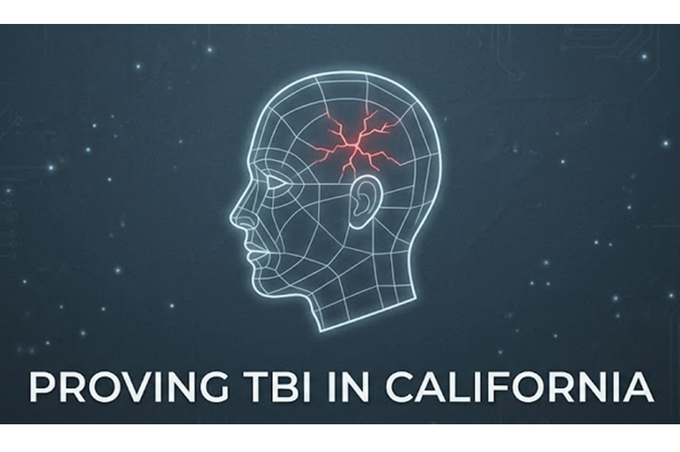
Traumatic brain injuries, commonly known as TBIs, present one of the most difficult challenges in modern civil litigation. When a person suffers a broken bone or a deep physical wound, the injury is obvious. A simple X-ray or photograph can show a jury exactly what is wrong. Brain injuries, especially mild-to-moderate ones, are different. A victim might look completely healthy on the outside while experiencing profound changes in memory, personality, and cognitive function. Because these deficits are hidden from plain view, they are often called invisible wounds.
For legal professionals following international legal trends, California civil courts serve as an important testing ground for how these complex cases are handled. The state has developed highly sophisticated methods for bringing scientific evidence into the courtroom. This article explores how California law bridges the gap between complex neurology and the legal burden of proof, offering a helpful point of comparison for legal scholars and practitioners worldwide.
The Challenge of Proving Subclinical Head Injuries
In any personal injury lawsuit, the plaintiff bears the burden of proving that the defendant's negligence caused their specific injuries. In a brain injury case, this is easier said than done. The most common diagnostic tools used in emergency rooms, such as standard CT scans and traditional MRIs, are designed to detect structural issues like skull fractures or major brain bleeding. They are not sensitive enough to capture microscopic damage to brain tissue.
A person can experience a severe concussion that alters their ability to work or care for themselves, yet their standard hospital scans will return completely normal results. Defense attorneys often use these negative test results to argue that the plaintiff is exaggerating their symptoms. Because standard imaging can miss these deep neurological issues, finding an experienced TBI lawyer in Long Beach families trust after a major traffic or industrial accident is critical for building a scientifically sound case that can withstand defense scrutiny.
To get this subtle medical evidence into evidence, attorneys must navigate California's strict legal standards for expert testimony. Under the landmark state Supreme Court ruling in Sargon Enterprises v. University of Southern California, trial judges act as gatekeepers. They must carefully evaluate the logic and scientific basis of any expert witness before allowing them to testify in front of a jury. This means medical experts cannot simply offer opinions; they must back up their findings with rigorous data.
Advanced Neuroimaging and the Shift to Objective Data
To meet this high standard of proof, personal injury litigation increasingly relies on advanced neuroimaging techniques that go far beyond standard hospital scans. These technologies allow doctors to visualize the actual functioning and microscopic pathways of the brain.
One primary tool is Diffusion Tensor Imaging, which measures the movement of water molecules along the white matter tracts of the brain. If the brain has suffered cellular tearing due to a sudden impact or whiplash, the water movement becomes irregular. This provides visual proof of axonal shearing, a common cause of long-term cognitive issues. Other tools, like Functional MRIs and PET scans, measure blood flow and metabolic activity, showing whether specific regions of the brain are underperforming.
In addition to imaging, quantitative neuropsychological testing is essential. These standardized tests evaluate a patient’s memory, attention span, problem-solving abilities, and emotional regulation. By comparing a plaintiff’s scores against normalized data for their age and education level, a neuropsychologist can turn subjective complaints into objective, measurable deficits that a jury can easily comprehend.
Putting a Dollar Value on Intangible Harms
Once an injury is proven, the court must determine how much money is required to compensate the victim. In California, damages are divided into two main categories: economic and non-economic.
Economic damages focus on tangible financial losses. Because serious brain injuries often require lifetime care, attorneys use life care planners to project the long-term costs of cognitive therapy, specialized medications, and home health assistance. Forensic economists are also brought in to calculate the loss of earning capacity. If a young professional suffers a brain injury that prevents them from returning to their career, the financial loss over their remaining working years can easily reach millions of dollars.
Non-economic damages cover pain, suffering, and the loss of enjoyment of life. Unlike some jurisdictions that enforce strict statutory limits on these rewards, California leaves the evaluation of non-economic damages up to the discretion of the jury for general personal injury claims. Juries are asked to assign a reasonable dollar value to the loss of a person’s sense of self, their inability to bond with family members, and the constant mental frustration caused by a permanently altered brain.
A Cross-Continental Comparison: California vs. Europe
The open-ended, jury-driven approach used in California contrasts sharply with the civil law systems found throughout continental Europe, including Spain. These differences highlight how distinct legal cultures tackle the same medical problem.
First, the role of the fact-finder changes the nature of the trial. In California, twelve ordinary citizens listen to oral arguments, witness cross-examinations, and view emotional medical animations before deciding on a verdict. In Europe, civil proceedings are typically inquisitorial and led by professional judges who rely heavily on written dossiers and clinical medical records rather than dramatic courtroom presentations.
Second, the way damages are calculated differs completely. Many European nations use highly structured scale systems, such as the Baremo system in Spain, to determine compensation for bodily injury. These systems use point values based on age and medical severity to ensure predictability and prevent massive, unexpected payouts. While this provides consistency and lowers litigation costs, it leaves little room for the massive non-economic awards that California juries routinely grant to account for unique personal suffering.
Finally, the usage of expert witnesses follows a different model. California litigation involves party-retained experts, meaning each side hires their own neurologists and radiologists to argue their position. In Europe, courts prefer to rely on independent, court-appointed medical experts or public health assessors to provide a neutral evaluation of the patient’s condition.
The Future of Neuro-Law
The intersection of neuroscience and civil litigation is expanding rapidly. As imaging technologies become more accurate and accessible, the legal definition of an invisible wound is changing. What was once dismissed as a subjective complaint can now be traced to specific, visible damage within the brain's complex pathways.
While the European model prioritizes predictability and judicial efficiency, the California system highlights the power of tailored advocacy and advanced technology in proving complex injuries. By studying how California courts combine cutting-edge science with traditional tort law, international legal professionals can find new ways to improve medical advocacy and protect the rights of catastrophically injured clients within their own legal systems.