





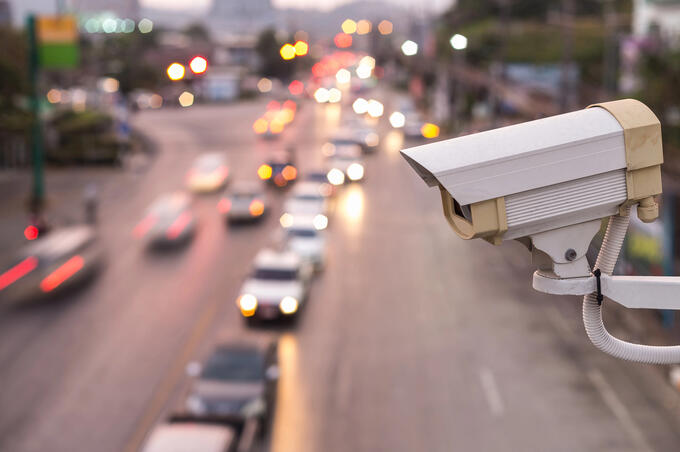
Traffic cameras have changed the way many crashes are understood after the fact. At one time, accident cases often came down to conflicting stories between drivers, a limited police report, and whatever physical evidence remained at the scene. Now, in some cases, traffic camera footage, red-light camera images, intersection monitoring systems, and related records can provide a much clearer picture of what actually happened. That does not mean every accident is captured on video, and it does not mean camera evidence tells the whole story. When it exists, it can have a major impact on how fault is evaluated and how a personal injury claim develops.
Why Camera Evidence Matters
In a typical crash, both drivers may believe they had the green light, were traveling safely, or had the right of way. Witnesses may disagree. By the time investigators arrive, vehicles may have been moved and memories may already be incomplete.
Camera evidence can help narrow those disputes. Depending on the location and system involved, footage or images may show the position of the vehicles before impact, whether a driver entered on a red light, lane usage or illegal turns, traffic flow at the time of the collision, weather and visibility conditions, and approximate timing leading up to the crash.
When available, this kind of evidence can support a stronger liability argument and reduce some of the guesswork that often surrounds intersection and roadway collisions.
Not All Cameras Serve the Same Purpose
A lot of drivers assume every visible traffic camera records violations or stores useful footage. That is not always true. Some cameras are used only for traffic monitoring and do not issue citations or retain video for long periods. Others are red-light or speed enforcement systems tied to specific violations.
Federal Highway Administration materials on CCTV traffic monitoring and roadway operations show that these systems are often used for operational monitoring, incident awareness, and traffic management rather than as all-purpose public evidence archives.
That distinction matters; a person involved in an accident should not assume that video exists simply because a camera was visible at the scene. It is important to identify what type of camera was present and whether footage may be available before it is deleted or overwritten.
Resources that track known camera locations can be useful starting points when trying to determine what may have been operating in the area of a crash.
Camera Evidence Can Strengthen or Challenge a Claim
Video evidence is often thought of as something that automatically helps the injured person, but that is not always the case. It can support a claim, but it can also expose weaknesses.
For example, footage may clearly show another driver running a red light, drifting into the wrong lane, or making an unsafe turn. In that situation, the value of the evidence is obvious. However, video can also be used by insurers to argue that the injured driver contributed to the crash by following too closely, moving abruptly, or failing to react.
That is why camera evidence needs to be evaluated in the context of the full accident record, not in isolation. Timing, angle, image clarity, and what happened before and after the clip all matter.
The Importance of Acting Quickly
One of the biggest mistakes people make after a crash is assuming important evidence will still be available later. Traffic footage is often retained for only a limited time. Some systems keep data for days, while others may overwrite it even sooner. Private businesses may also routinely delete surveillance footage unless asked to preserve it.
This makes timing critical, so if there is reason to believe a nearby traffic or surveillance camera may have captured the crash, that possibility should be investigated as early as possible. In many cases, a lawyer can help identify potential sources of footage, request preservation, and determine whether the evidence may support the injury claim. Speaking with an experienced personal injury lawyer early in the process can make it easier to protect evidence before it disappears.
Camera Footage Is Only One Part of the Case
Even strong video evidence does not replace the rest of a well-documented claim. Medical records, photographs, witness statements, repair records, police reports, and proof of lost income still matter. A successful claim depends on both proving how the crash happened and showing the extent of the injuries and losses it caused.
For example, a video may clearly establish that another driver ran a red light. That helps with fault. However, it does not automatically prove the severity of a neck injury, the need for future treatment, or the income lost during recovery. Those parts of the claim still need to be supported by proper documentation.
What Drivers Should Do After a Crash Near a Camera
If a collision happens near an intersection, commercial area, or major roadway, it is smart to think immediately about possible camera evidence. A few practical steps can help: note the exact location of the crash, take photos that show nearby traffic devices, poles, or visible cameras, identify nearby businesses that may have surveillance systems, request a copy of the police report, and avoid assuming that government agencies will automatically preserve footage.
Even if a person cannot get the footage directly, identifying the possibility early is valuable. The more specific the location details are, the better the chance of finding useful evidence before it is lost.
A More Complete Picture of What Happened
Accident claims are often strongest when they rely on more than one source of proof. Camera evidence can be powerful because it adds an objective layer to the case. It may confirm the sequence of events, challenge false statements, or support an injured driver’s account of what happened.
At the same time, not every camera record or image is clear, and not every clip tells the full story. When handled correctly, traffic camera evidence can play an important role in helping establish fault and protecting the integrity of a car accident claim.
Endnote
For anyone involved in a crash near a monitored intersection or roadway, one of the smartest things to do is act quickly, preserve what can be preserved, and build the claim before key evidence disappears.